

Foreign Object Debris (FOD) Program at Kennedy Space Center (KSC)

The following article is a synopsis of an article called "Foreign Object Debris (FOD) Program at KSC." The complete article can be found at www.hq.nasa.gov.

According to Kennedy Space Center, FOD is defined as follows: Damage to, or malfunction of, a launch vehicle or payload caused by any foreign object(s) that are alien to flight systems. This may cause material damage or it may make the system or equipment inoperable, unsafe or less efficient.

What is FOD? FOD is somewhat ambiguous, because it varies depending on the situation. A paper clip on a desk is not FOD, because it is not foreign to that environment, but a paper clip in a commercial passenger jet engine or space shuttle main engine could prove catastrophic to either the flight vehicle, crew or both. Anything can be FOD if it is foreign to that environment. KSC has numerous facilities for servicing and processing the Shuttle and its Payloads, External Tank and Solid Rocket Boosters, and their various components. Each facility has its own unique tasks to perform, and associated hazards, both to the flight hardware and personnel.

A FOD prevention program was implemented to improve the reliability of Space Shuttle processing. The key to success is in a simple formula. AWARENESS + PREVENTION = COMPLIANCE. To attain a successful FOD Prevention Program, total employee involvement is required. Everyone needs to be responsible.

A FOD training program was established at KSC and a certificate of training is issued to each employee upon completion of the training. The employee signs the certificate as a pledge and personal commitment to help prevent Foreign Object Debris and Damage and to acknowledge their personal responsibility to the space program and flight safety.

General guidelines for FOD Prevention are listed and can be tailored as needed to the specific requirements of particular work sites. You can access this complete set of guidelines by going to the website at www.hq.nasa.gov.

Kennedy Space Center's Foreign Object Debris (FOD) Program is structured as follows:
AWARENESS + PREVENTION = COMPLIANCE

AWARENESS

Developed Incentives, Posters, FOD Cones Standardized Approach on:

  • FOD Prevention
  • Tool Control
  • Hazardous Materials
  • Gained Top Management Support
  • Structured Meetings
  • Provide Trends Analysis
  • Continuously Improving
  • Instrumental in KSC FOD Prevention Committee and KSC FOD Awareness Week
  • Stress Flight Safety Daily
PREVENTION
  • Initiated FOD Monitors and FOD Walkdowns
  • Initiated Points of Contact (POCs) and Departmental Interface Representatives (DIRs) for Hazardous Materials Processing
  • Developed and Implemented KSC FOD Prevention Video and "Clean As You Go" Certification (Now Orbiter Access Requirement)
  • Established and Implemented Tool Control and Accountability
  • Improved Eye Appeal of Shops and Established Shop Ownership
  • Improved Hand Tool Quality and Reduced Quantity of Tools
  • Became Technical Advisors for Center 

COMPLIANCE

  • Shuttle Processing Contractor Procedure for FOD Prevention as Governing Document on Compliance in Operational Processing Areas
  • Internal Audits and Spot Inspections
  • Tool Control
  • FOD Prevention
  • Hazardous Materials
  • Reduced Florida Hazardous Waste Audit Findings
  • Reduced Safety Hazards
  • Reduced In-Flight FOD Reported by Astronauts

Total employee involvement makes everyone responsible. The Ten Points of the Kennedy Space Center FOD Prevention Program is as follows:

1) All employees trained in safety awareness, tool control, housekeeping, hazardous material compliance, FOD Prevention and sign "Clean As You Go" commitment.
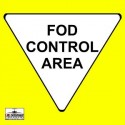
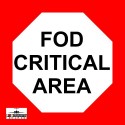
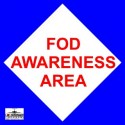
2) Areas are defined. All employees have an area assignment.
3) Volunteer FOD monitors, hazardous material points of contact (POCs) and tool control users ensure compliance within their work areas.
4) Walkdowns include management, support organizations and FOD monitors.
5) Rapid corrective action response from support organizations.
6) FOD monitors and POCs monthly awareness meetings.
7) Managers ensure monthly toolkit self-audit and report to quality.
8) Incentive program.
9) Awareness campaign.
10) Processing NWTs adopting ownership.

The KSC FOD program has been successful. By involving all hands-on employees, the Shuttle processing operations FOD Prevention Program has been able to lead by example. Operational areas reflect pride in ownership, accountability and a safe, clean work environment. Awareness has significantly improved and Hazards have been reduced.

A FOD Program reduces costs in lost tools, damaged equipment, schedule impacts due to rework, and reducing unnecessary risks in a business that is inherently risky.

The lack of such a program can result in unacceptable performance of equipment, scrapping of otherwise usable hardware, expenditure of unnecessary resources, and possible schedule delays, or major penalties which could include loss of mission capability, injury to personnel or loss of life, and damage to, or loss of the shuttle vehicle. Since Kennedy Space Center implemented their FOD Prevention Program, FOD incidents have decreased significantly from prior levels.

Next Article


FOD Discussion Group

Copyright 2001-2008 FODNews.com. All rights reserved.